
June 15, 2026
Ayurveda, the traditional medicine of India, offers natural remedies for both health concerns and beauty needs. One of the many versatile Ayurvedic herbs is Haritaki. Haritaki is one of the most esteemed herbs in classical Ayurveda—praised for its cleansing, strengthening, and balancing effects on body and mind. Known as the “Mother of all herbs,” it forms the backbone of Triphala, and is traditionally used to support digestion, cognition, elimination, and spiritual clarity. Haritaki is said to have been gifted by Lord Shiva himself and appears frequently in Tantric and Buddhist medical traditions. In Tibetan medicine, it is known as the "king of herbs" and associated with longevity, awareness, and energetic purification. Also, Haritaki is often called Abhaya (“fearless”)—the one who bestows courage and mental strength. Haritaki trees are often planted near temples as symbols of wisdom and discipline.
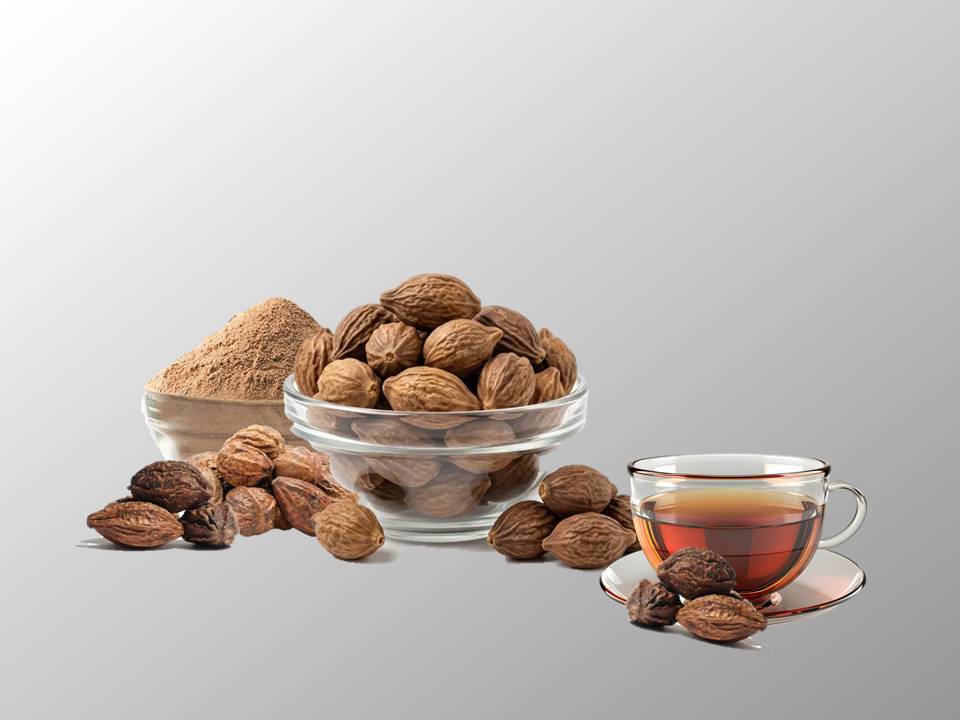
Technically, the fruit of the deciduous myrobalan plum tree,Haritaki, is considered an important herb in Ayurveda and Siddha medicine, both indigenous systems of medicine in India. The fruit itself is small, oblong, and less than an inch in size. The fruits are often collected when they’re still green and raw and then dried until golden brown or black. They’re then powdered and made into Ayurvedic remedies. The fruit’s potency depends on where it was collected, its color, and its shape.
Traditional Uses (Ayurvedic View)
Haritaki is renowned for its ability to tone and cleanse the digestive tract, regulate bowel movements, and nourish all seven dhatus. It is considered a Medhya Rasayana—enhancing memory, clarity, and spiritual focus. Used for:
• Constipation, sluggish bowels, abdominal gas
• Poor memory, brain fog, indecisiveness Weak immunity and fatigue
• Eye problems and oral hygiene
• Skin issues caused by internal toxins (Ama)
• Energetic purification and meditative clarity
Preparation Methods
• Churna (Powder): Commonly taken at night with warm water or ghee
• Triphala Blend: Combined with Amalaki and Bibhitaki for gentle daily detox
• Oil (Haritaki Taila): Used for external massage and hair nourishment
• Decoction or paste: Applied for wounds, ulcers, or skin cleansing
Precautions & Contraindications
• Safe for most people in moderation
• Avoid in cases of diarrhea or severe debility
• Can be too drying for very depleted Vata types unless combined with ghee or milk
• Best taken in small doses consistently over time
Folk Remedies
• Evening Cleanse: ¼ tsp Haritaki powder in warm water before bed
• Cognitive Boost: Haritaki + Brahmi + Ghee blend for memory and focus
• Mouth Rinse: Haritaki decoction as antibacterial gargle for gums and throat